
Wayfinding Signage


Serving Abu Dhabi Since 2014
.svg)


Updated On
April 3, 2026
Written by:
Ninety Nine Advertising Technical Team

What Wayfinding Signage Covers
Wayfinding signage covers directional pylon signs, monoliths, suspended directional signs, projecting blade signs, directional window lettering, and door identification signs deployed as a coordinated navigation hierarchy across the property.
The category applies to office buildings, clinics, campuses, mixed-use developments, retail parks, shared-use developments, and multi-entry sites where visitors, staff and vehicles move between parking areas, pedestrian transfer points, lobbies, corridors, lift zones, and destination rooms.
In Abu Dhabi, these systems are specified across commercial entrances, high-traffic corridors, and building interiors where unguided movement creates measurable delays at decision points. Ninety Nine Advertising plans, fabricates, and installs wayfinding systems across these environments.


Who Wayfinding Signage Is For
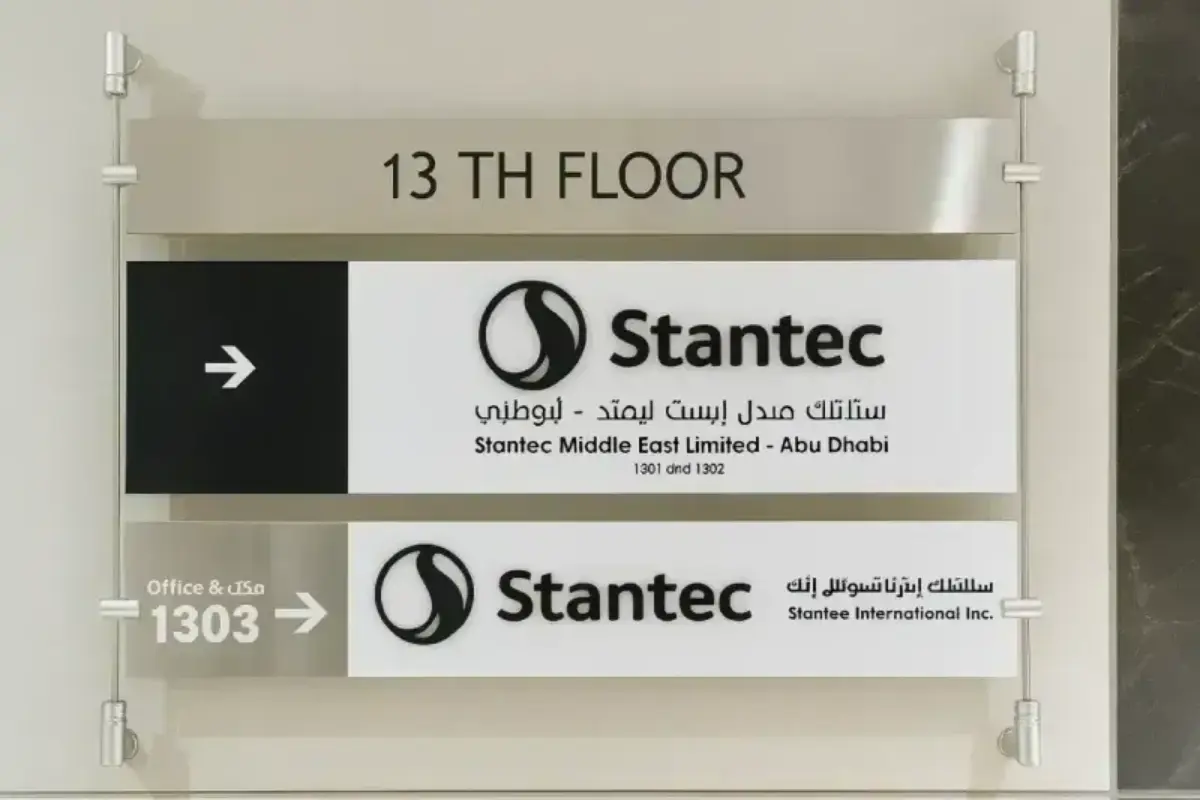
Wayfinding signage is used where a space must support clear indoor navigation, identification, and zoning across offices, retail environments, mixed-use buildings, and multi-floor properties.
In corporate offices and commercial buildings, it helps staff, visitors, and tenants move through receptions, lift lobbies, corridors, departments, and floor destinations.
In retail stores and larger retail environments, it supports customer movement, store zoning, and service-point identification.
In mixed-use and multi-entry properties, it connects parking, arrival points, shared areas, and building entrances to the correct destination. It is therefore specified by space owners, property operators, facility managers, and occupiers responsible for how people move through the site.
Explore Our Wayfinding Signage Solutions

Directional Pylon Signs & Monoliths

Lobby Directories for Site Navigation
Suspended Wayfinding Signs

Directional Window Lettering

Directional & Door Signs
Directional Blade Signs
Projects Delivered Across Abu Dhabi
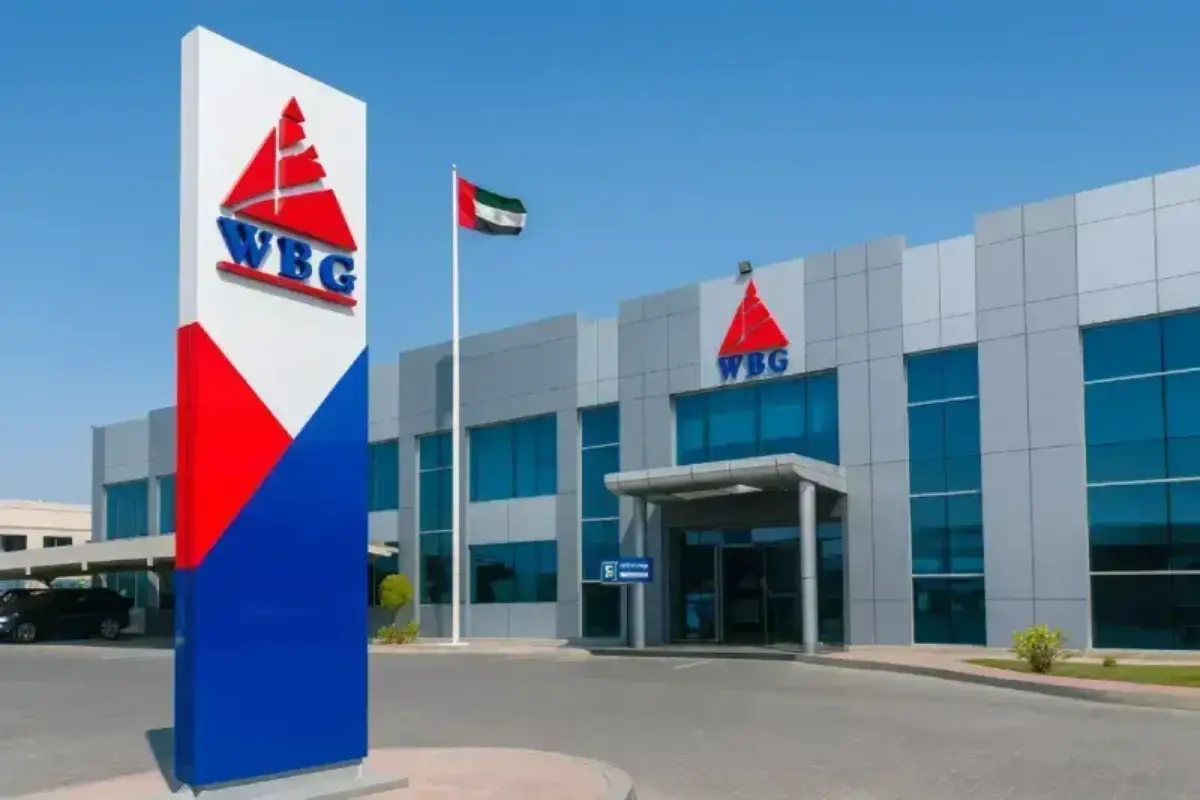


Western Bainoona Group, MSF M39, Musaffah, Abu Dhabi
Scope: Directional pylon sign with civil concrete foundation, 4mm fire-rated ACP cladding, and backlit 3D aluminium letters with powder-coated finish at a high-traffic entrance.
Outcome: The pylon established long-distance identification with backlit 3D lettering maintaining night visibility from approach distance.
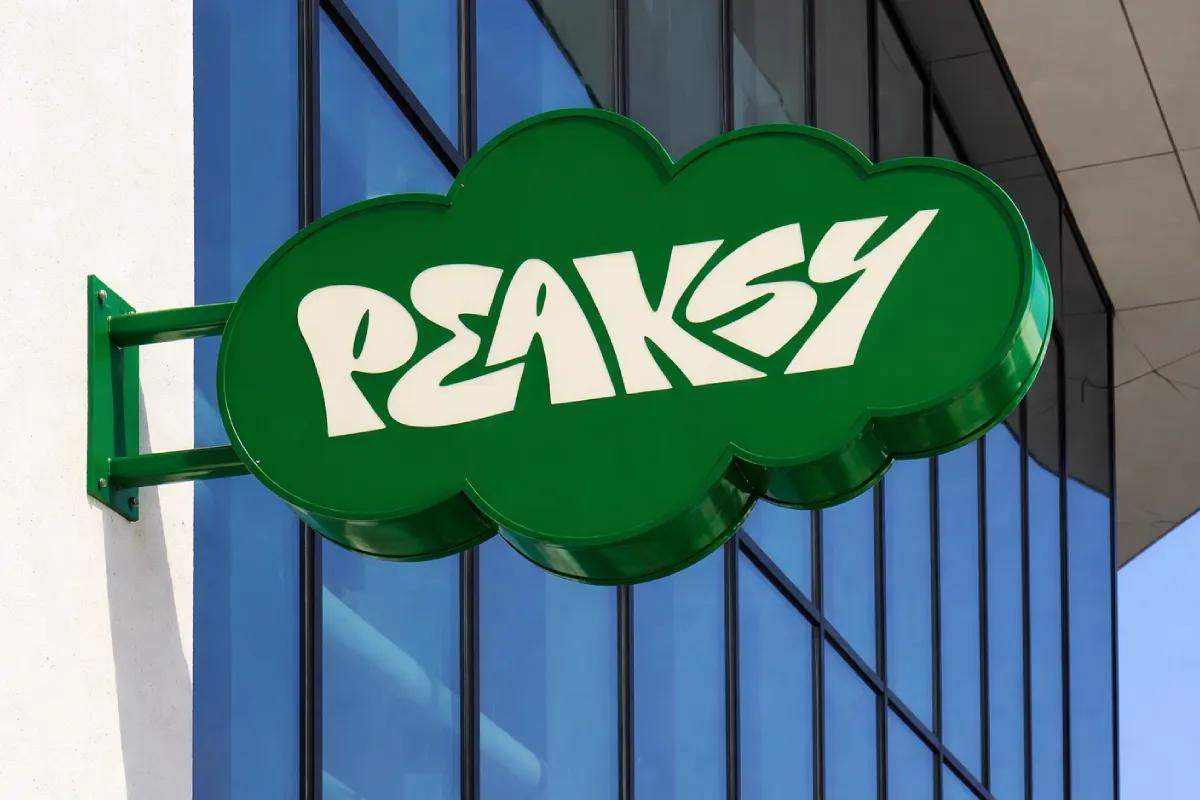
Peaksy Adventure Park, Yas Island, Abu Dhabi
Scope: Double-sided directional blade signs fabricated with Samsung chip LED modules, Mean Well HLG-series drivers in sealed enclosures, and roof-penetration waterproofing for a sun-exposed, high-level installation.
Outcome: The blade signs guided visitors from the main pedestrian circulation area to the venue entrance, providing readable directional information before arrival.
Al Waqaed Laundry, Abu Dhabi
Scope: Directional pylon signs with concrete foundation works, push-through acrylic logos, and Samsung LED illumination fabricated to ADNOC site standards.
Outcome: The pylon identified the laundry service to drivers at the petrol station approach, where the service would otherwise not be visible from the road.

Wayfinding Signage Types and What Each One Does
Directional Pylon Signs and Monoliths
We fabricate directional pylon signs using 4mm fire-rated ACP cladding, backlit 3D aluminium letters with powder-coated finishes, and civil concrete foundations for structural stability.
A pylon without an engineered foundation creates a wind-load risk no surface fix resolves. Push-through acrylic faces with Samsung chip LED modules and Mean Well HLG-series IP67 drivers maintain illumination output in Abu Dhabi's heat and UV exposure, where long-distance vehicle approach visibility determines whether drivers reach the correct entry without stopping.
Suspended Wayfinding Signs for High-Traffic Corridors in Abu Dhabi
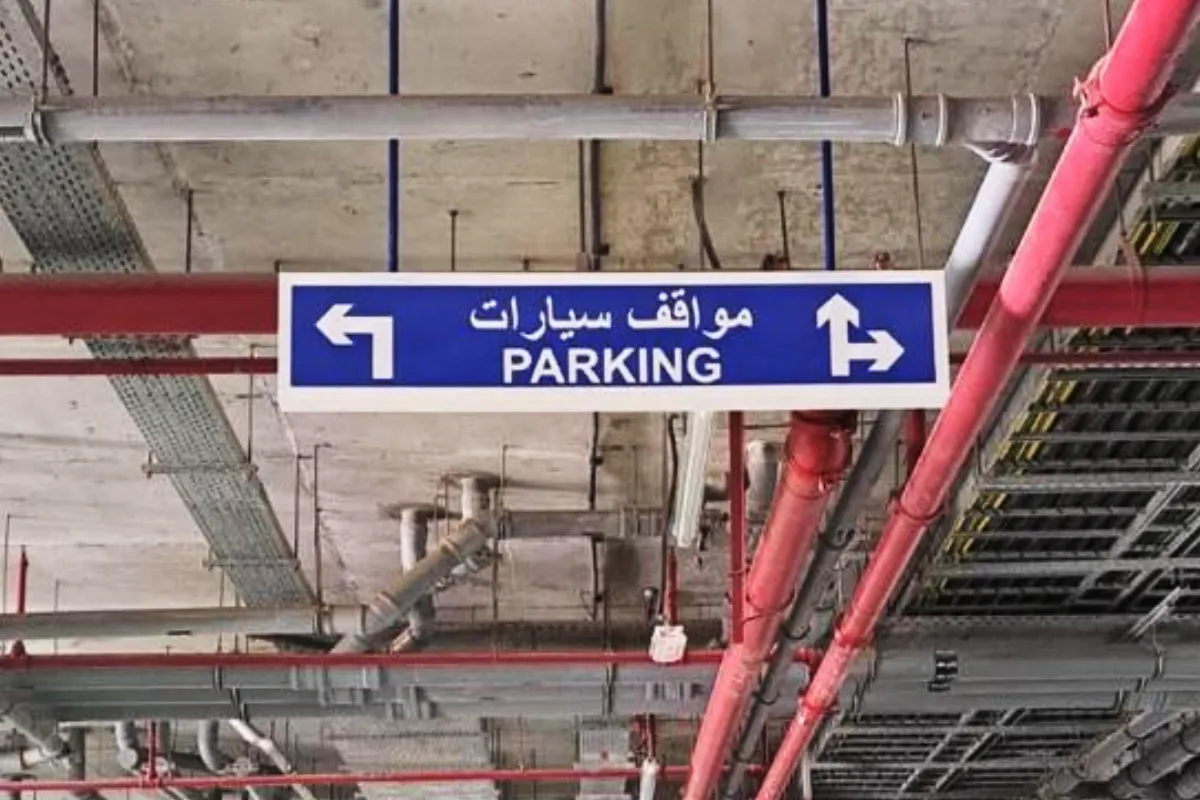
We install suspended directional signs using double-sided panels on load-rated anchor points that maintain overhead clearance without consuming floor space.
In long corridors where decision points occur at distance, a sign readable from one direction only produces the same hesitation as no sign. Load-rated fixing determines whether the installation is structurally cleared or requires remediation after fitout is complete.
Directional Window Lettering for Glass Partitions in Abu Dhabi
Ninety Nine Advertising applies high-contrast vinyl lettering to glass surfaces at partition walls, glazed entries, and interior glass zones where rigid sign structures are not practical.
In shared-use buildings and multi-tenant offices, glass is often the only available plane at key decision points. Contrast levels must meet accessibility standards for visual legibility — a parameter that affects compliance, not only aesthetics.
Directional Blade Signs for Corridors and Junctions in Abu Dhabi
We fabricate projecting blade signs using powder-coated aluminium, Samsung chip LED modules, and PLEXIGLAS® acrylic faces for illuminated variants.
A blade sign reads from a perpendicular corridor approach where a flat-mounted sign produces no useful information. Peaksy Adventure Park on Yas Island required double-sided blade signs with Mean Well HLG-series drivers in IP-rated enclosures to maintain output stability in full sun exposure at installation height.
Door Identification Signs for Offices and Shared Buildings
Lobby directories and door identification signs are often built with modular slat systems, allowing room numbers, staff names, and suite details to be updated without replacing the full sign body.
In multi-tenant buildings, where occupancy changes regularly, this prevents every staff move, room update, or tenancy change from becoming a new fabrication cost. Cast acrylic faces and powder-coated aluminium frames help maintain a consistent look across lobbies, corridors and office floors when directories and door signs are specified as one coordinated family.
Why Wayfinding Signs Fail in Abu Dhabi — and How We Prevent It
Wayfinding signage across Abu Dhabi offices, clinics, campuses, mixed-use developments, and multi-entry sites is a navigation infrastructure decision, not a fitout line item. DMT controls and TAMM-linked permit processing apply to certain sign types, while Abu Dhabi’s heat, UV load, coastal humidity, and dust make material and placement choices directly consequential over the life of the system.
The failure modes in this category have identifiable causes. A system that lacks consistent routing logic across arrival, parking, entry, lobby, floor movement, and destination zones produces the specific outcome source content names: users stop, guess, backtrack, or ask for help at each decision point, which is a circulation failure, not a cosmetic one. Non-compliant placement or construction can interrupt movement, introduce physical hazards, or stall approvals at the submission stage.
Directory systems specified without modular update capability require full replacement when tenant names, suites, or departments change, a recurring cost that design decisions at the outset either create or avoid.
Ninety Nine Advertising addresses each of these at journey mapping, navigation planning, and material specification stages before fabrication begins.
Ninety Nine Advertising fabricated and installed directional pylon signage for Western Bainoona Group at MSF M39, Musaffah, including a monumental pylon with a civil foundation, 4mm fire-rated ACP cladding, and backlit 3D aluminium letters. A directional pylon installation for Al Waqaed Laundry in Abu Dhabi included concrete foundation works, push-through acrylic logos, and Samsung LED illumination integrated in the sign body. Double-sided directional blade signs for Peaksy Adventure Park on Yas Island were engineered with Samsung chip LED modules, Mean Well HLG-series drivers in sealed enclosures, and waterproofed penetrations to support weather resistance at height in sun exposure.


Compliance & Permits for Wayfinding Signs in Abu Dhabi
Non-compliant placement or construction on a wayfinding project can interrupt circulation, introduce physical hazards, or stall installation at the approval stage after fabrication cost has been committed.
External and regulated wayfinding signs in Abu Dhabi operate under DMT controls and TAMM permit workflows, governing external signage, structural placements, and regulated sign positions.
Compliance parameters include language requirements, safe protrusion limits for projecting signs, concealed electrical components, and placement standards that maintain accessible circulation paths. Accessibility requirements under Abu Dhabi accessibility standards, and Sahel where applicable, extend the scope to tactile navigation, Braille elements, visual contrast, and legible hierarchy — assessed at system level, not sign by sign.
Approval submissions must coordinate site conditions, fabrication drawings, artwork, and structural details before production begins. Committing fabrication cost before these are confirmed creates redesign or resubmission risk.
Where a landlord or master developer is involved, their documentation requirements form a coordination layer alongside the DMT and TAMM submission. Ninety Nine Advertising manages both as part of the same project scope, with submission-ready drawings, artwork, and structural details prepared to applicable requirements.
A site assessment confirms placement feasibility, compliance parameters, and approval conditions before any production cost is committed. Contact Ninety Nine Advertising to arrange that assessment.
Our Process From Assessment to Delivery Across Abu Dhabi
Site Survey & Journey Mapping
A wayfinding project begins with a review of how people and vehicles move through the property — where decision points occur, where confusion or delay happens, and which approach, parking, entry, lobby, floor, and destination zones require navigation guidance. We conduct a site survey before any scope is agreed, mapping the full route hierarchy and confirming sign positions, sightlines, structural fixing conditions, and any accessibility or compliance parameters relevant to the property type.
Engineering & Contracting
Detailed navigation planning, material specification, artwork, and all required approvals are confirmed before fabrication begins.
We define the sign location hierarchy, proof artwork for language requirements and protrusion compliance, prepare submission-ready drawings and structural details for DMT controls and TAMM permit workflows where required, and coordinate landlord or master developer documentation — no fabrication begins until the permit file and contracted scope are both closed.
Fabrication & Production
Signs are fabricated against confirmed specification and approved artwork, with quality checks completed before any unit leaves the workshop. We build to confirmed materials — fire-rated ACP cladding, architectural-grade powder-coated aluminium, PLEXIGLAS® acrylic faces, Samsung chip LED modules, and Mean Well HLG-series drivers with IP67/IP65 ingress protection in metal housings, installed in serviceable enclosures — with installation access and building coordination confirmed before dispatch.
Installation & Handover
Installation is completed with structural fixing, electrical connection, and final placement confirmed against approved specification before handover is accepted.
We verify fixing integrity, installed ingress protection conditions, illumination output, and sign alignment against approved artwork and navigation plan — handover is completed only when the installed system matches the confirmed wayfinding hierarchy in full.
Frequently Asked Questions
What is included in a wayfinding signage system?
A wayfinding system covers the full navigation hierarchy from arrival to destination. Depending on the property, this includes directional pylon signs and monoliths, lobby directories, suspended directional signs, projecting blade signs, directional window lettering, and door identification systems. The mix is determined by how users move through the site and where decision points require guidance.
Can one wayfinding system cover both outdoor and indoor navigation?
Yes. Outdoor components such as pylon signs, monoliths, and approach guidance use fire-rated ACP cladding, architectural-grade powder-coated aluminium, and Mean Well HLG-series drivers with IP67/IP65 ingress protection installed in serviceable enclosures suited to Abu Dhabi’s heat and UV exposure. Indoor components use cast acrylic faces, modular directory signs, and high-contrast vinyl on glass. The navigation logic connects both environments as one routing sequence.
Do wayfinding signs in Abu Dhabi require approvals?
Some do. External and regulated sign types are subject to DMT controls and TAMM permit workflows. Language requirements, safe protrusion limits, and concealed electrical components are compliance parameters within that process. Where a landlord or master developer is involved, their documentation requirements form a separate coordination layer. The compliance section of this page covers the full approval scope.
Are tactile and Braille wayfinding signs required?
They may be required depending on building type and applicable obligations under Abu Dhabi accessibility standards, and Sahel where applicable. Accessible navigation, including tactile elements, Braille, visual contrast, and readable placement hierarchy, is assessed at system level, not sign by sign. Whether these elements are mandatory for a specific property is confirmed at the site survey stage before specification is committed.
What materials are commonly used for outdoor wayfinding in Abu Dhabi?
Outdoor wayfinding systems use 4mm fire-rated ACP for structural cladding, architectural-grade powder-coated aluminium for frames and letter construction, PLEXIGLAS® acrylic for illuminated faces, Samsung chip LED modules, and Mean Well HLG-series drivers with IP67/IP65 ingress protection installed in serviceable enclosures. Reflective surfaces used for vehicular approach and parking guidance are typically specified as 3M High Intensity Grade Prismatic Reflective Sheeting 3930 on properly prepared aluminium sign panels.
Can tenant directories be updated without replacing the whole sign?
Yes, when the system is specified with modular construction. Lobby directories and door identification systems built with modular slat frames allow tenant names, room numbers, floor listings, and department details to be updated independently of the sign housing. This is the specification decision that determines whether occupancy changes require partial updates or full replacement.
How long does a wayfinding signage project take from assessment to installation?
Project duration varies mainly by sign size, fabrication complexity, approval requirements, and site access. As a general guide, smaller wayfinding projects typically complete in 5 to 10 working days, while larger or more complex projects typically take 14 to 21 days, depending on scope, approvals, and site conditions. Installation is scheduled around building access windows, safety controls, and any required inspections.
Can existing wayfinding signage be updated or partially replaced without full replacement?
Yes, in many cases. Modular lobby directories and door identification systems are designed for partial update, so slat components and face panels can be replaced without removing the primary structure. For pylon signs and suspended systems, partial replacement depends on the original construction method, illumination layout, and fixing type. Where the original system was designed as a serviceable assembly, faces, graphics, letters, or lighting components can often be updated without full replacement; where it was built as a sealed or one-piece unit, replacement scope is more limited.