
Building Branding


Serving Abu Dhabi Since 2014
.svg)


Updated On
April 4, 2026
Written by:
Ninety Nine Advertising Technical Team
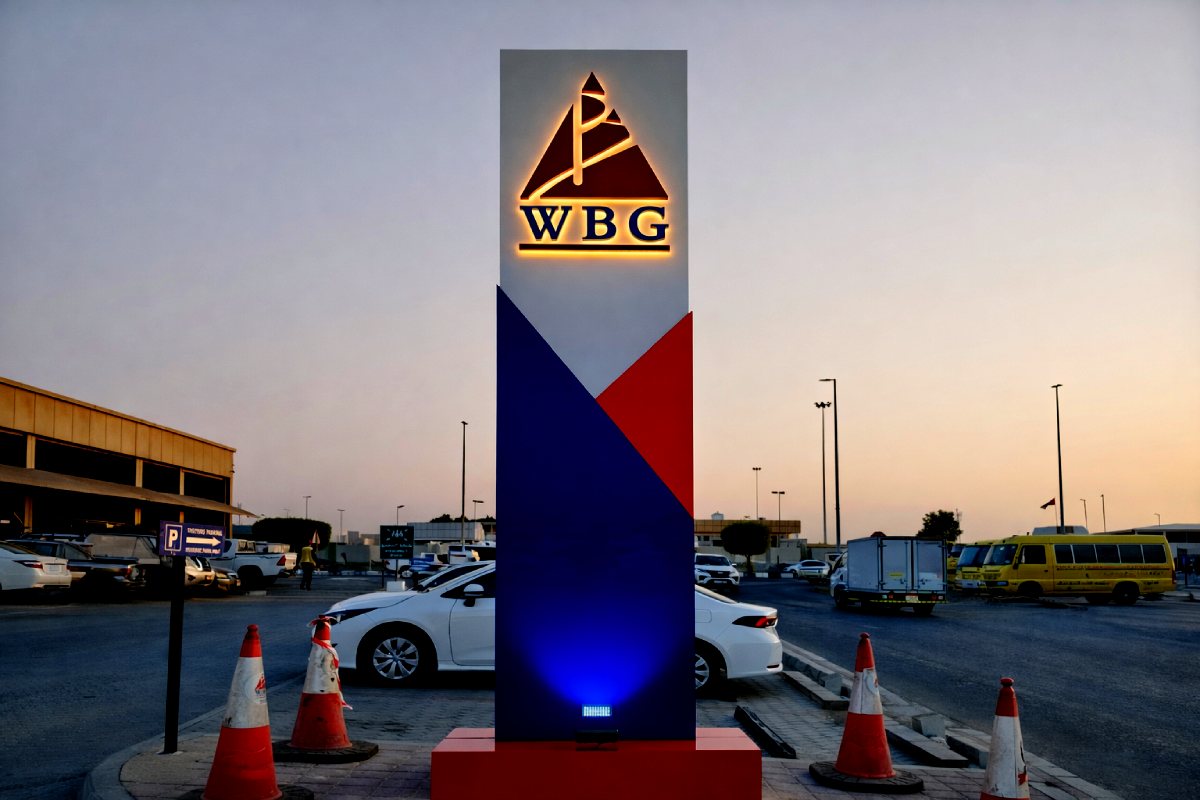
What Building Branding Cover
Building branding covers facade signage, entrance pylons and monoliths, rooftop and skyline signage, lobby identity signs, tenant directories, suspended wayfinding, wall directional lettering, glass lettering and markers, privacy frosted films, common-area wall branding, and door and area identification signs.
Building branding applies to commercial towers, residential complexes, managed mall environments, and mixed-use developments where facades, lobbies, parking zones, corridors, and shared circulation areas each require a consistent identity treatment. Buyer types include mall management, commercial building operators, residential complex management, and mixed-use property stakeholders. Ninety Nine Advertising delivers this scope across properties in Abu Dhabi.

.webp)

Who Bulding Branding Is For
Mall management requires the full property to read as one coherent environment across public-facing facades, internal circulation, and tenant-adjacent shared zones. Commercial building operators use building branding to establish external identity at approach level and maintain navigational consistency across lobbies, parking links, and floor-level destinations.
Residential complex management applies this scope to create a recognizable arrival experience and organized shared-area environment across the full site. Mixed-use property stakeholders need a single coordinated identity framework that holds across the different use types, access routes, and tenant configurations present within one managed asset.
When branding is planned as one coordinated system, the full property functions as a legible, consistently managed environment.
Explore our Building Branding Solutions

Building Facade Signage

Entrance Pylons & Monoliths

Rooftop & Skyline Signage

Directional Projecting Blade Signs
Suspended Signs for Shared Areas
Building Glass Lettering & Markers

Privacy Frosted for Shared Premises

Common-Area Wall Branding
.jpg)
Wall Directional Lettering

Building Lobby Identity Signs

Building Directories & Tenant Listings
Door & Area Identification Signs
Projects Delivered Across Abu Dhabi


Andalus Al Seef Resort & Spa — Al Muntazah, Zone 1, Abu Dhabi
Scope: Backlit facade signage, internally illuminated entrance pylons, and resort-wide room identification signs across the full property. Check Project Details
Outcome: The property became identifiable from distance through the illuminated facade, with a structured wayfinding system supporting visitor navigation .
Makani Al Shamkha Shopping Centre — Al Shamkhah, Abu Dhabi
Scope: Large-scale three-dimensional facade signage across three separate elevations. Check Project Details
Outcome: The installation established dominant brand presence and long-distance identification from three approach directions, giving the centre consistent visibility across its full road-facing perimeter.
Peaksy Adventure Park — Yas Island, Abu Dhabi
Scope: Blade signs and facade signage at entrance level. Check Project Details
Outcome: The scope delivered distance identification for the venue and clearer directional navigation for visitors approaching and entering the property.

Building Branding Types and What Each One Does
External Identity and Skyline Visibility in Abu Dhabi
We use industrial-grade LED modules, cast acrylic faces, and marine-grade metal returns to establish the building's name across main elevations and approach views. Correct specification against UV intensity and coastal salinity determines how long the installation holds its standard — building facade signage anchors the property at road level, while rooftop and skyline signage extends recognition across longer sightlines. Wrong material grade turns degradation and light leaks into maintenance obligations.
Entrance and Arrival Identity for Abu Dhabi Properties
We fabricate entrance markers in durable metal and acrylic engineered for full external exposure, giving the property a defined identity before visitors reach the door. Protrusion and height are compliance parameters under DMT Version 5, not design preferences. Entrance pylons and monoliths deliver this layer for commercial operators and mall management who need to close the gap between road-level recognition and a controlled arrival point.
Site Access and Parking Guidance for Managed Properties
We install projecting and ground-level markers at entrances, parking links, and transition points to reduce decision friction for drivers, visitors, and service teams. On mixed-use and multi-access sites, a legible arrival system is a functional requirement — without clear placement at the first decision point, visitor flow breaks before it reaches the building. Directional signs for building access address this from road edge through to parking and entry.
Lobby Navigation and Tenant Information in Abu Dhabi Buildings
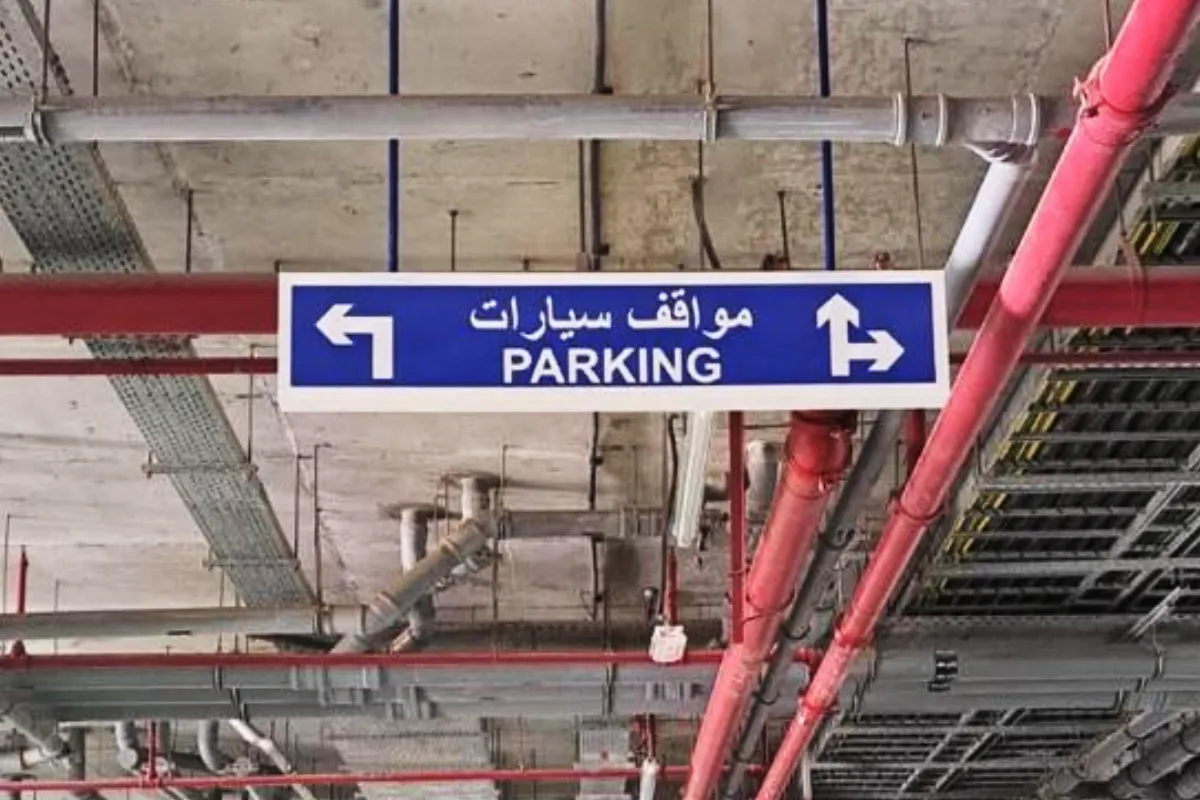
We produce dimensional signs, overhead markers, directory systems, and wall lettering in acrylic, brushed metal, and engraved finishes for shared interiors. Building lobby identity signs establish arrival, suspended signs for shared areas carry navigation across long sightlines, building directories and tenant listings direct visitors to destinations, and wall directional lettering organizes circulation where mounted signage is not required.
Glass Zoning and Privacy for Shared Building Areas
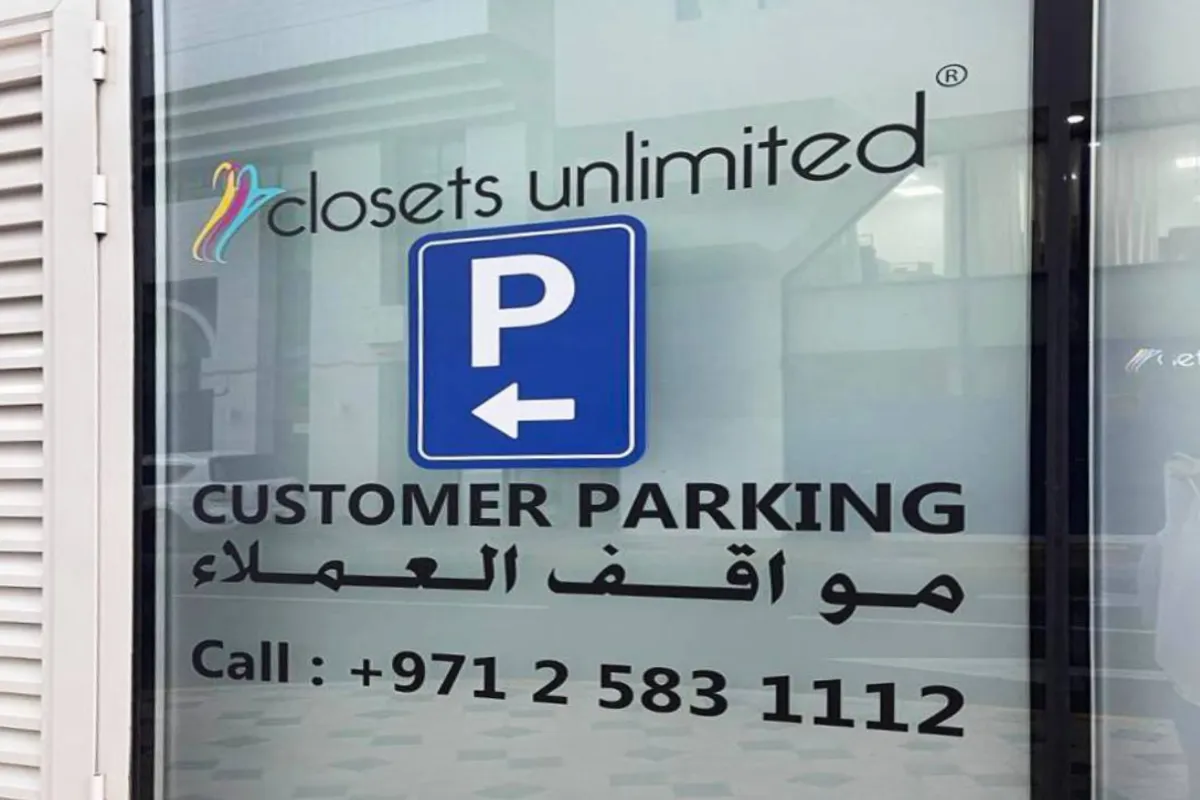
We apply markers and film across internal glazing to define spaces, label access points, and manage visibility without blocking light. In Abu Dhabi, thermal cycling and UV intensity make film grade a durability decision — incorrect specification causes early delamination. Building glass lettering and markers handle identification and zoning, while privacy frosted for shared premises is selected against privacy intent, exposure direction, and the function of each defined space.
Common Area Communication and Room-Level Identification
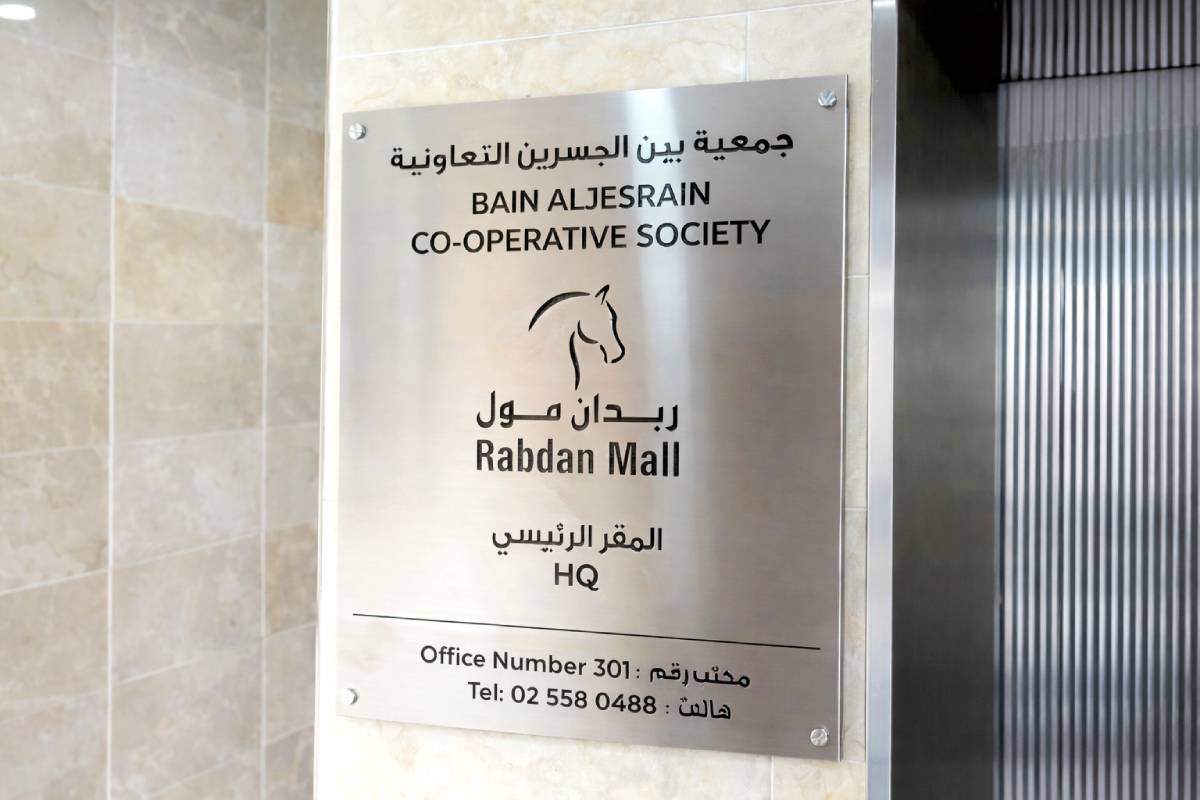
We produce graphics and identification signs for lobbies, waiting areas, corridors, amenity spaces, and floor-by-floor destinations across the full managed property. Common-area wall branding maintains visual consistency across shared surfaces, while door and area identification signs give building management a coherent framework across every room, service zone, and floor. Without this layer, shared surfaces become inconsistent and harder to maintain as the property evolves.
Why Building Branding Fails in Abu Dhabi — and How We Prevent It
Full-property branding across facades, lobbies, parking zones, and shared areas is specified by mall management, commercial building operators, and mixed-use property stakeholders operating under DMT Regulations Version 5 and TAMM permit requirements — where compliance and material performance are evaluated together, not separately.
Visible cables and poorly integrated electrical work cause approval failures at the permit stage; technical coordination resolves mounting logic and illumination before fabrication begins.
Incorrect material specification against sustained UV intensity, coastal salinity, and thermal cycling causes surface warping, light leaks, and early driver failure across illuminated facade elements; material selection is confirmed at specification stage against exposure direction, coastal location, and installation zone.
Visual inconsistency across facade, lobby, and parking levels undermines building legibility and creates fragmented maintenance obligations; zoning and system planning assigns the correct signage type to each functional zone across the full property before any component is committed.
Andalus Al Seef received backlit facade signage for distance identification and a resort-wide wayfinding system through internally illuminated pylons and room identificaiton signs to support visitor navigation across the property.
Makani Shopping Centre received large-scale three-dimensional facade signage establishing dominant brand presence and long-distance identification from three separate elevations. Peaksy Entertainment received blade signs and facade signage delivering distance identification and clearer visitor navigation at the entrance level.


Compliance, Permits and Approval for Building Branding
Committing fabrication cost before permit confirmation is the most avoidable expense in a building branding project — dimensional non-compliance, uncontrolled protrusion, or poorly integrated electrical work identified at the approval stage creates redesign obligations that fall on the project budget, not the permit authority.
Building branding in Abu Dhabi is governed by DMT Version 5 signage controls, with submissions processed through the TAMM portal. DMT Version 5 controls placement, construction method, and approval parameters across the full property scope.
Compliance extends beyond basic permit approval: rooftop signage requires specific justification, entrance signage carries dimensional limits, protrusion must remain within defined tolerances, and electrical integration is assessed as part of the submission. For shared and mixed-use properties, consistency between external and internal signage zones is a compliance consideration. Where sale or lease messaging is introduced, Madhmoun property advertising requirements apply as a separate layer.
TAMM submissions for building branding require design visuals and mockups, method statements, and shop drawings, with the specific combination determined by product type within the scope. Approval timelines typically range from two to three days for straightforward applications to one to two weeks where elevation, illumination, or scope complexity requires closer review. Fabricating before approvals are confirmed exposes the project to revision cost and installation delay.
Contact us to arrange a site assessment.
Our Process From Assessment to Delivery Across Abu Dhabi
Site Review and Assessment
Building branding projects begin with a structured review of the property across facade exposure, main entrances, approach routes, parking areas, lobby zones, and shared circulation points.
We record facade orientation, elevation dimensions, approach sightlines, and internal zone requirements to confirm what each area of the property needs before any scope is defined.
Engineering & Contracting
Scope, material specification, and artwork are agreed and signed off before fabrication begins, with DMT Version 5 compliance parameters and TAMM permit submissions coordinated alongside landlord or developer approval where required. We confirm mounting logic, illumination requirements, component grades, and viewing distances at this stage so specification is locked before production cost is committed.
Fabrication & Production
Each building branding element is fabricated against the confirmed specification, with industrial-grade LED modules, durable drivers, cast acrylic faces, marine-grade metal returns, and interior finishes in acrylic, brushed metal, and engraved systems produced to the material grades confirmed at Step 2. We conduct quality checks against the approved scope before any element leaves production.
Installation & Handover
Installation is coordinated against building access requirements, with each element checked on site against the approved specification, mounting confirmation, and electrical integration before handover.
We confirm that every zone — facade, entrance, lobby, glazing, and shared areas — is installed and performing to the agreed scope before the project is closed and warranty is issued.
Frequently Asked Questions
What is building branding?
Building branding is the full-property branding of a managed building or complex across facade identity, entrances, lobbies, navigation points, glass zones, shared areas, and room-level identification. It covers the building as a managed asset, not a single tenant office or retail unit.
Is building branding the same as real-estate advertising?
No. Building branding covers the property's own identity, functionality, privacy, and navigation across permanent or semi-permanent shared environments. Real-estate advertising applies separately when the message involves selling or leasing inventory within the property.
What does a typical building branding scope include?
A typical scope covers facade signage, entrance pylons or monoliths, rooftop identity where permitted, lobby signs, directories, suspended wayfinding, wall directional lettering, glass markers, privacy frosted films, common-area wall branding, and door or area identification systems.
What is the difference between building branding and office branding?
Building branding applies to the managed asset as a whole — facade signs, entrance markers, directories, parking guidance, and shared-area navigation. Office branding applies to one tenant workspace inside the building, including reception signs, glass branding, and internal office navigation.
What is the difference between building branding and store branding?
Building branding covers the full building environment and shared property-level communication. Store branding covers one retail tenant environment, including storefront presence, customer-facing glazing, and in-store branding.
Can one building branding system include both exterior signs and interior directories?
Yes. A complete building branding scope combines exterior identification with interior shared-area directories, parking guidance, and directional signage so the property functions as one coordinated environment.
Why is building branding treated differently from office or store branding?
Because the decision-maker, scope, and objective differ. Office and store branding cover one occupier environment. Building branding covers the whole managed asset — shared arrival zones, common circulation, landlord-side identity, and multi-user functionality across the full property.
What permits are required for building branding in Abu Dhabi?
Building branding in Abu Dhabi is governed by DMT Version 5 signage controls, with submissions processed through the TAMM portal. Required documents typically include design visuals and mockups, method statements, and shop drawings, with the specific combination determined by product type. Landlord or developer approval operates as a separate coordination layer. Approval timelines range from two to three days to one to two weeks depending on scope complexity.
How long does a building branding project take from assessment to installation?
Project duration depends on product type, quantity, scope scale, and permit complexity. Single-product applications such as glass lettering or small window branding can be completed in one day. Larger scopes involving multiple product types, significant quantities, complex permitting, or access coordination can extend to four weeks. Timeline is confirmed at the engineering and contracting stage once scope and approvals are defined.
Can existing building branding be updated or partially replaced without full replacement?
In many cases, yes. Window film, cut lettering, and modular interior elements can be updated selectively where the substrate condition and original specification support it. Illuminated fascia components and three-dimensional letters typically require full replacement rather than partial modification — partial replacement creates visible colour and illumination output inconsistency across the sign face. The update scope is confirmed at site assessment before any replacement cost is committed.